
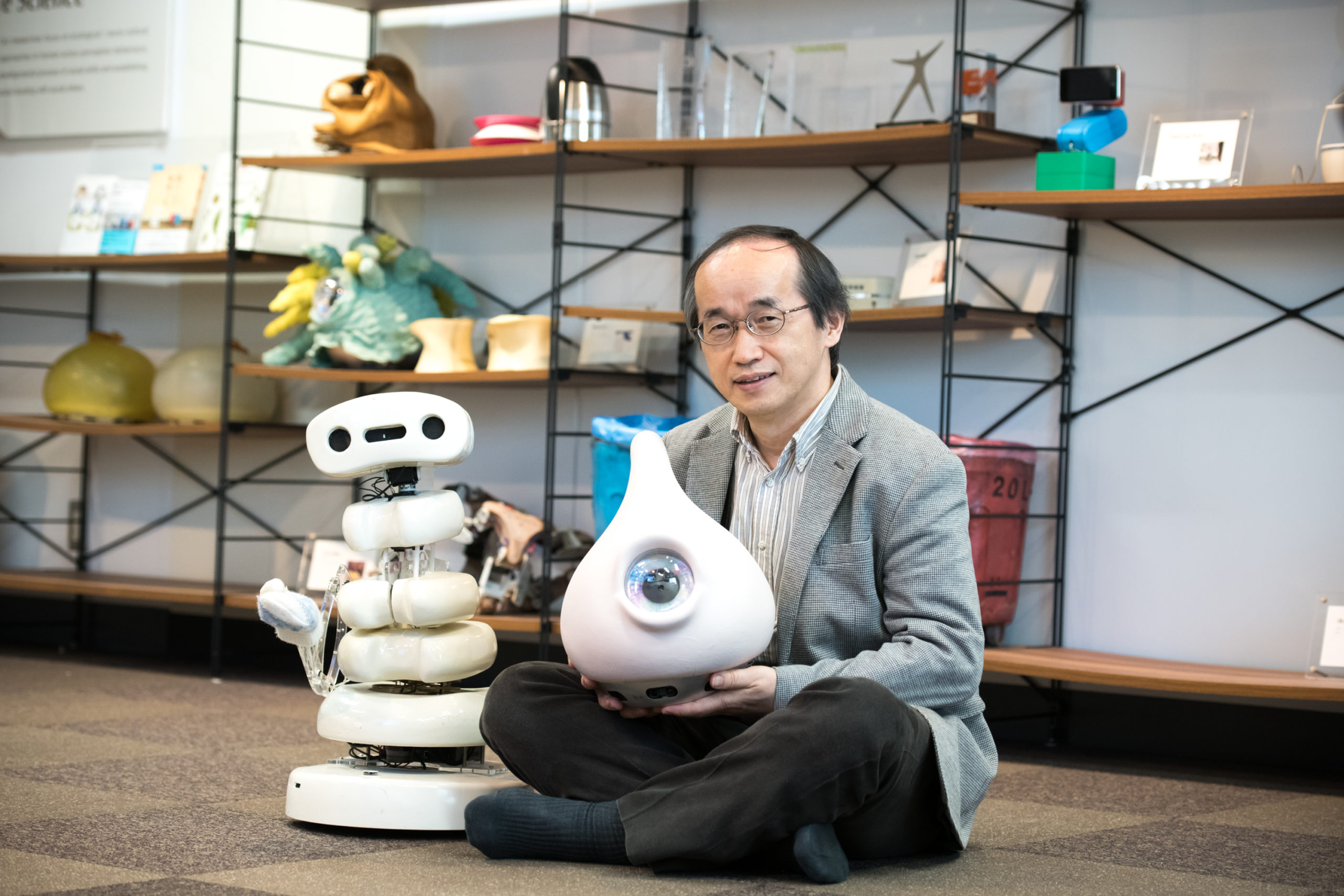
 岡田美智男|「弱いロボット」研究の先駆者
1960年、福島県浅川町生まれ。東北大学大学院工学研究科で工学博士号を取得後、音声言語システムの研究に従事。幼少期より声が小さく、意見が埋もれがちであった自身の経験を元に、「言い淀むプロセス」が豊かなコミュニケーションを生み出すことに着目。「弱いロボット」という新たな概念を提唱し、多様なロボット開発を行った。2006年から2024年まで豊橋技術科学大学情報・知能工学系教授として、コミュニケーションの認知科学、社会的ロボティクス、ヒューマンロボットインタラクションの研究を牽引。2025年4月より筑紫女学園大学副学長および現代社会学部教授に就任し、「弱いロボット」研究を発展させた「コンヴィヴィアル・ロボティクス」の教育・研究に取り組んでいる。
Michio Okada | “Weak Robotics” Pioneer
Born in Asakawa, Fukushima, in 1960. After earning a Doctor of Engineering degree from Tohoku University’s Graduate School of Engineering, he engaged in research on spoken language systems. Born with a soft voice, he often had difficulties being heard by others. But he realized that being hesitant to speak out can lead to richer communication. There, he began to propose the new concept of “weak robotics” and developed diverse robotic systems. From 2006 to 2024, as a professor at the Department of Computer Science and Engineering at Toyohashi University of Technology, he led research in the cognitive science of communication, social robotics, and human-robot interaction. Since April 2025, he has served as the vice president and a professor in the Faculty of Contemporary Society at Chikushi Jogakuen University, where he has engaged in the education and research of “Convivial Robotics,” which evolved from his “weak robotics” research.